
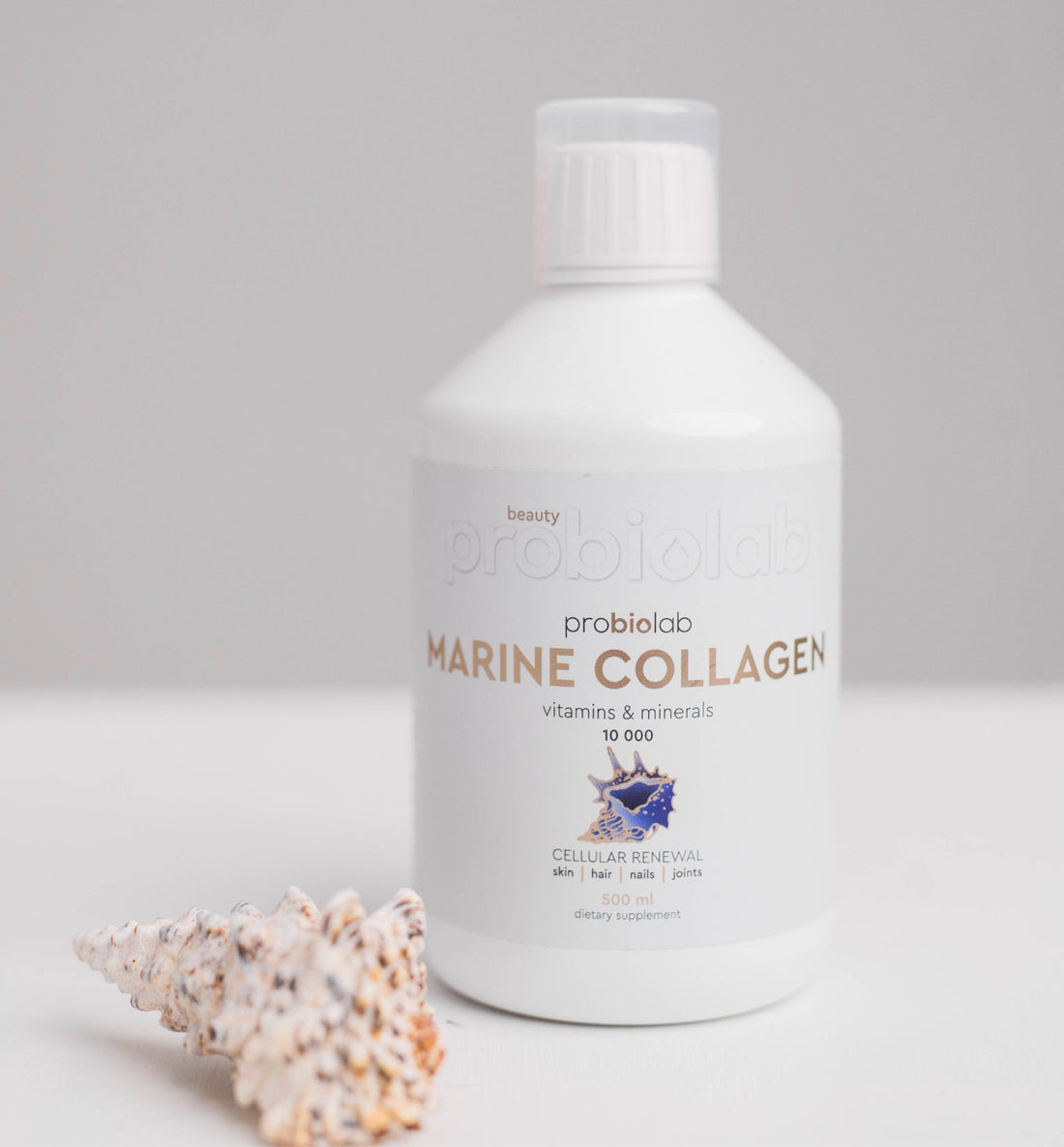
Collagen: what to combine it with and how to take it correctly
Share
The trichologist Yulia Markova the CEO of the “Professional Community of Trichologists” association talks about collagen: what to combine it with and how to take it correctly.
Hydrolyzed collagen contains 19 amino acids, mainly glycine, proline, hydroxyproline including 8 of the 9 essential amino acids. It does not contain tryptophan.
It is absorbed into the bloodstream in the form of small peptides. It has been proven to affect the skin: it increases the density of collagen fibrils and fibroblasts, and therefore stimulates collagen production.
The interest in collagen as a nutraceutical for skin and hair care is growing, and the topic is widely discussed.
Having reached the age of 25-30, according to a number of clinical studies, we all begin to experience a decrease in collagen levels. Today, the generally accepted daily norm is considered to be 2.5 - 5 grams per day for those who are 30 years old or older.
According to the 2019 clinical trial review, the daily intake of hydrolyzed collagen in a dosage of 2.5-15 g is effective and safe. There is no reliable data on the side effects, only in case of allergic reactions to the protein.
Currently the scientists are familiar with more than 28 types of collagen, but only four types are considered the most important and most studied.
When different “types” of raw collagen are hydrolyzed, they all form the same collagen peptides. Therefore, when collagen peptides enter the body, they stimulate the production of all types of collagen. Your body responds to the intake of peptides and begins to produce the types of collagen that it needs. Thus, the quality of the peptides and their absorption capacity are more important than the original type of raw collagen. To fully replenish the collagen deficiency, it is enough for it to be hydrolyzed.
There are 11 studies on PubMed involving 805 patients who were given collagen hydrolysate. The oral collagen supplements were found to increase skin elasticity, skin hydration, and skin collagen density.
How it affects hair growth changes is yet to be studied and described. However, collagen is present in the areas around and underneath the hair follicle and the scientists have found that the hardening of this collagen sheath is one of the main causes of premature hair loss. This phenomenon causes pressure on the surrounding blood vessels, causing disruption of microcirculation. As a result, the follicles do not receive the necessary “nutrition” and normal hair growth is disrupted.
My personal opinion on “to drink or not to drink” the hydrolyzed collagen is DRINK. Especially with the presence of age-related changes, when its level naturally decreases.
HOW TO TAKE COLLAGEN AND AVOID MISTAKES.
Currently there are known more than 28 types of collagen, but the most studied are 4 of them!
Most collagens are hydrolyzed (broken down) to form smaller and more easily digestible peptides. When collagen peptides enter the body, they stimulate the production of all types of collagen. Your body reacts to the intake of peptides and begins to produce the types of collagen it needs. To fully replenish the collagen deficiency, it is enough for it to be hydrolyzed.
How to take collagen correctly?
Let's take note of the following:
• Take it in the MORNING on empty stomach! This is the most effective way. But it is also allowed just to take it an hour before meals, or in the evening 2 hours after the last meal.
• Take it for at least 2 months!
• Do not take it while on a diet! Otherwise, collagen will go to replenish the protein deficiency, and it will not give a beneficial super effect on the beauty of your skin and hair.
• The preferred choice for collagen. Today, more and more studies indicate the high efficiency of hydrolyzed collagen found in the skin, scales and bones of sea fish.
What to combine collagen with?
• Vitamin C
• Hyaluronic acid
• B vitamins
• Vitamin E
• Magnesium and calcium participate in the synthesis of connective tissue and collagen.
• Iron, Zinc, Copper, Vitamin D
Having reached the age of 25-30, according to a number of clinical studies, we all begin to experience a decrease in collagen levels.
Hydrolyzed collagen contains 19 amino acids, mainly glycine, proline, hydroxyproline including 8 of the 9 essential amino acids. It does not contain tryptophan.
It is absorbed into the bloodstream in the form of small peptides. It has been proven to affect the skin: it increases the density of collagen fibrils and fibroblasts, and therefore stimulates collagen production.
The interest in collagen as a nutraceutical for skin and hair care is growing, and the topic is widely discussed.
Having reached the age of 25-30, according to a number of clinical studies, we all begin to experience a decrease in collagen levels. Today, the generally accepted daily norm is considered to be 2.5 - 5 grams per day for those who are 30 years old or older.
According to the 2019 clinical trial review, the daily intake of hydrolyzed collagen in a dosage of 2.5-15 g is effective and safe. There is no reliable data on the side effects, only in case of allergic reactions to the protein.
Currently the scientists are familiar with more than 28 types of collagen, but only four types are considered the most important and most studied.
When different “types” of raw collagen are hydrolyzed, they all form the same collagen peptides. Therefore, when collagen peptides enter the body, they stimulate the production of all types of collagen. Your body responds to the intake of peptides and begins to produce the types of collagen that it needs. Thus, the quality of the peptides and their absorption capacity are more important than the original type of raw collagen. To fully replenish the collagen deficiency, it is enough for it to be hydrolyzed.
There are 11 studies on PubMed involving 805 patients who were given collagen hydrolysate. The oral collagen supplements were found to increase skin elasticity, skin hydration, and skin collagen density.
How it affects hair growth changes is yet to be studied and described. However, collagen is present in the areas around and underneath the hair follicle and the scientists have found that the hardening of this collagen sheath is one of the main causes of premature hair loss. This phenomenon causes pressure on the surrounding blood vessels, causing disruption of microcirculation. As a result, the follicles do not receive the necessary “nutrition” and normal hair growth is disrupted.
My personal opinion on “to drink or not to drink” the hydrolyzed collagen is DRINK. Especially with the presence of age-related changes, when its level naturally decreases.
HOW TO TAKE COLLAGEN AND AVOID MISTAKES.
Currently there are known more than 28 types of collagen, but the most studied are 4 of them!
Most collagens are hydrolyzed (broken down) to form smaller and more easily digestible peptides. When collagen peptides enter the body, they stimulate the production of all types of collagen. Your body reacts to the intake of peptides and begins to produce the types of collagen it needs. To fully replenish the collagen deficiency, it is enough for it to be hydrolyzed.
How to take collagen correctly?
Let's take note of the following:
• Take it in the MORNING on empty stomach! This is the most effective way. But it is also allowed just to take it an hour before meals, or in the evening 2 hours after the last meal.
• Take it for at least 2 months!
• Do not take it while on a diet! Otherwise, collagen will go to replenish the protein deficiency, and it will not give a beneficial super effect on the beauty of your skin and hair.
• The preferred choice for collagen. Today, more and more studies indicate the high efficiency of hydrolyzed collagen found in the skin, scales and bones of sea fish.
What to combine collagen with?
• Vitamin C
• Hyaluronic acid
• B vitamins
• Vitamin E
• Magnesium and calcium participate in the synthesis of connective tissue and collagen.
• Iron, Zinc, Copper, Vitamin D
Having reached the age of 25-30, according to a number of clinical studies, we all begin to experience a decrease in collagen levels.